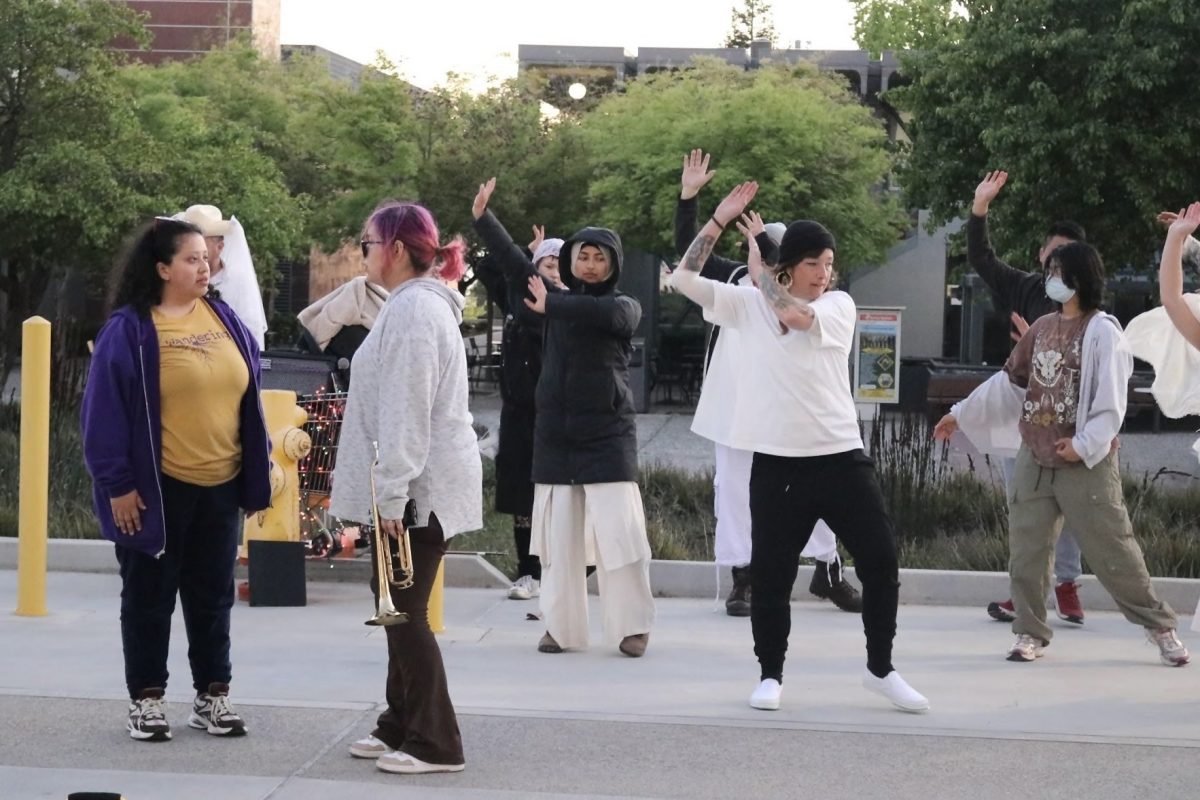
The Wandering Ensemble consists of performers from the CSUEB Inclusive Interdisciplinary Ensemble, members of Dandelion Dancetheater, and other community collaborators. Directed by CSUEB theatre and dance professor Eric Kupers, the collective explores inclusive performance as a vehicle for growth and healing.
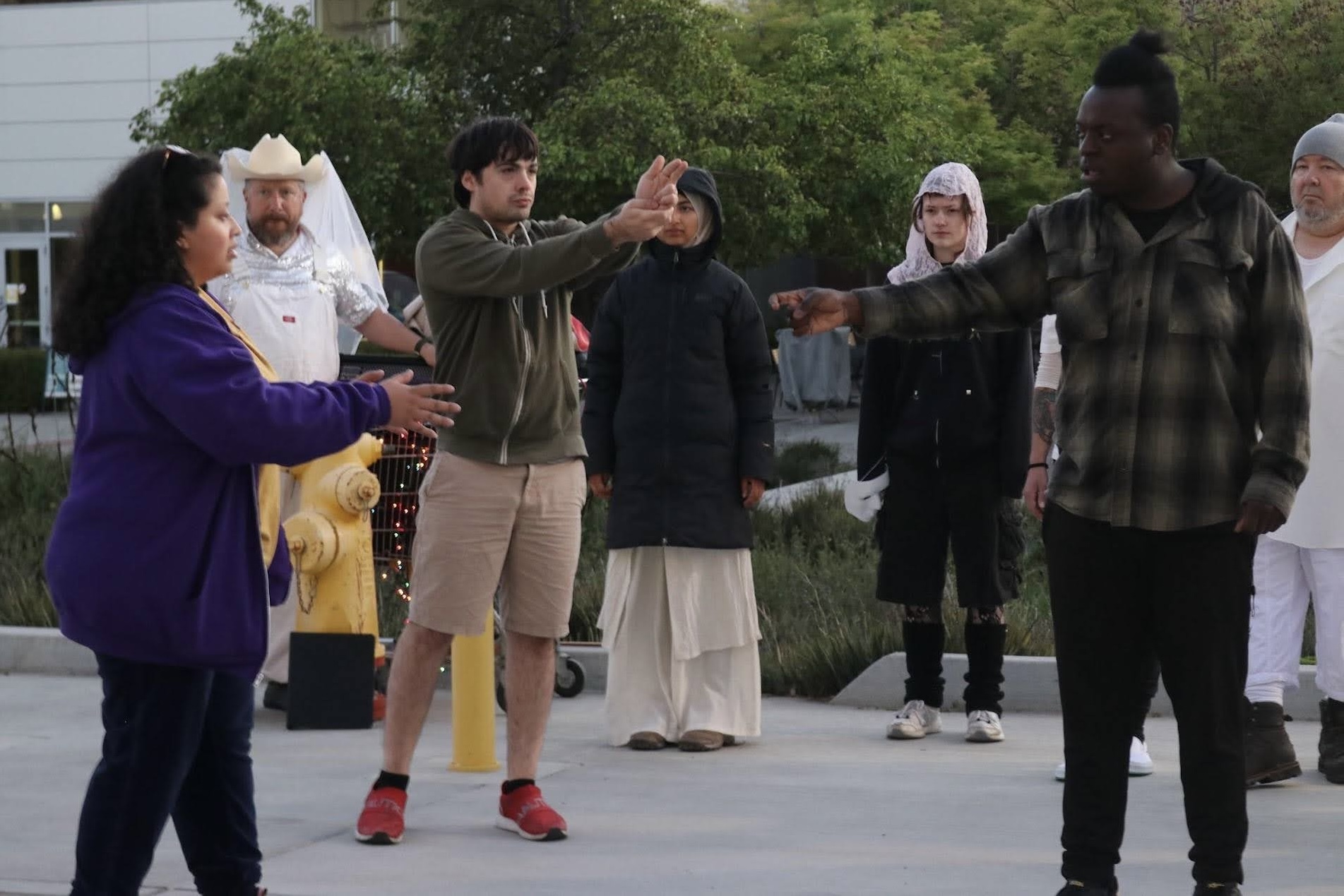
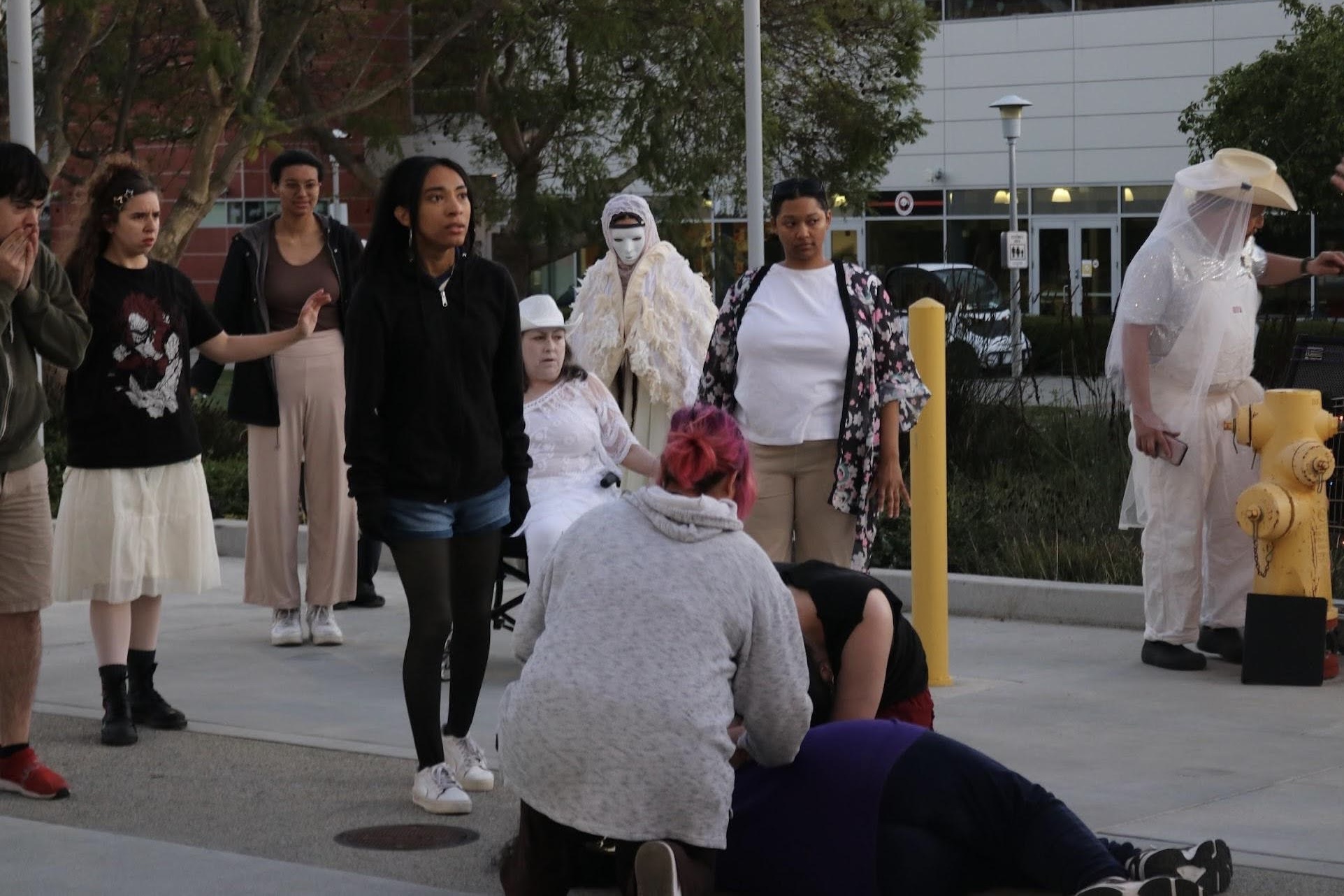
Throughout March and April, the Wandering Ensemble has held 30-minute, site-specific pop-up performances of “Parable of Belonging,” weaving throughout and outside the CSUEB CORE building. The project is an inclusive, multi-year, transdisciplinary performance inspired by Octavia E. Butler’s novel “Parable of the Sower.”
Butler authored “Parable of the Sower” in 1993. Her work reflects a cross-disciplinary engagement across multiple genres, including science fiction, speculative fiction, and Afrofuturism.
The novel is a fictional narrative that imagines life in California roughly thirty years into the future, effectively placing its events within our current time period. It depicts a society shaped by a series of apocalyptic developments—environmental collapse, economic instability, and social unrest—that have pushed the nation into a dystopian state. The work explores potential consequences of unaddressed social issues, such as institutional inequality and climate change.
Wandering Ensemble’s “Parable of Belonging” builds on Butler’s work by projecting an additional thirty years into the future, situating its narrative on the land that is currently the CSU East Bay Campus in 2057.
In this vision, society has failed to heed Butler’s earlier warnings, rendering the previously imagined destruction a lived reality. With stable government structures no longer intact, conditions have deteriorated into widespread disorder, forcing a small community of peaceful individuals to seek refuge within the remains of CSUEB’s CORE building.
Establishing their community rules off a recovered copy of “Parable of the Sower,” the CORE community preserves its peace by remaining hidden from outsiders. They navigate a world in which some individuals, known as “hearers,” possess heightened psychic sensitivity and the ability to communicate with spirits. However, when a new member arrives and seeks to introduce them to his own community, suspicion arises within the CORE, setting the events of the performance into motion.
Kupers said the performance’s themes of distrust, discord, and conflict mirror the broader dynamics of capitalism, imperialism, and authoritarianism present in contemporary society. He added that “Parable of Belonging” examines how society might move forward more inclusively and equitably, working to dismantle oppressive structures and imagine a more just future.
“As we go through a time of tremendous change in our world, our country, and at CSUEB, many of us find it helpful to look to artists who have imagined possible futures as guides for what may come next,” said Kupers. “Because so much remains uncertain, stories like “Parable of the Sower” and “Parable of Belonging” offer a framework for approaching change with greater flexibility and ease.”
Additional “Parable of Belonging” performances will take place throughout May. The schedule includes a performance at Ruth’s Table in San Francisco as part of the SF International Arts Festival on May 2 at 2:30 p.m. and 5:30 p.m. The ensemble will also perform the full production outside the CSUEB CORE building May 5–7 at 7 p.m., with free admission.
Building on Butler’s legacy, “Parable of Belonging” extends her vision by prompting both performers and audiences to consider how more equitable futures might be shaped. By engaging urgent social issues, it offers an alternative framework for thinking about community, responsibility, and change. CSUEB students are encouraged to attend and engage directly with the ideas explored in the project.