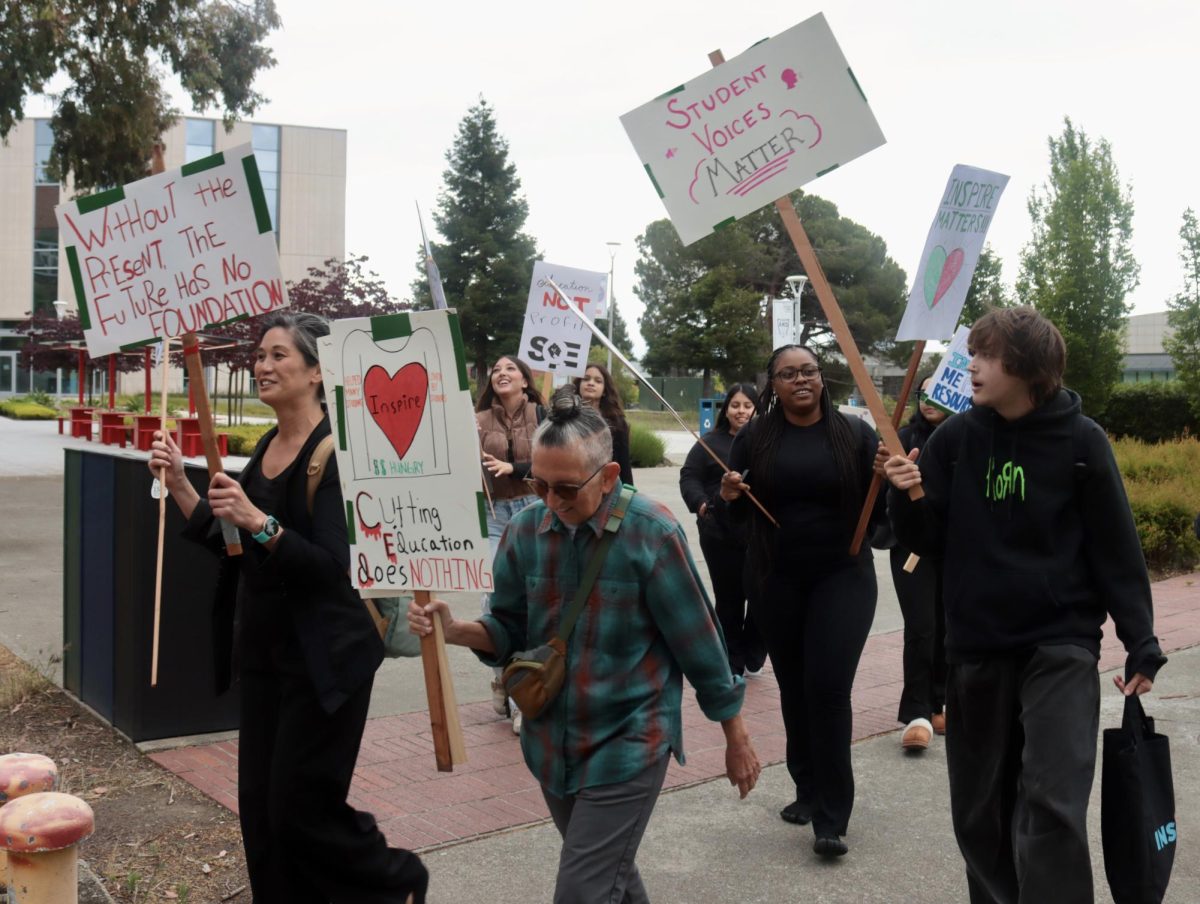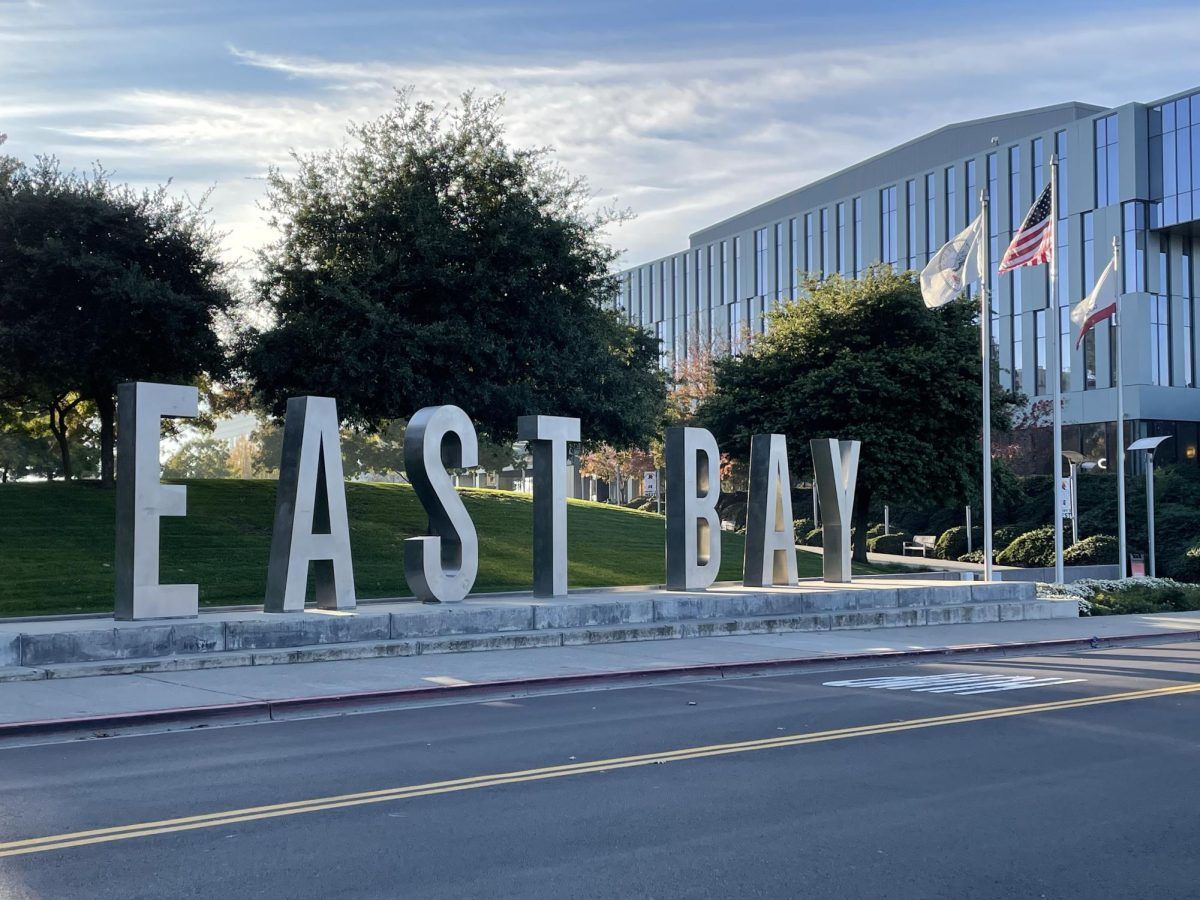
The California State University system faces financial strain driven by state budget cuts, delayed funding, rising operational costs, and declining enrollment. California State University, East Bay (CSUEB) administrators projected an $11.4 million deficit for the 2025–26 academic year. In response, the university has implemented strategies such as administrative reductions, hiring freezes, and joining the San Francisco Bay Region Network.
The university has also cut back on course offerings, with students reporting significantly increased academic stress and dissatisfaction.
As part of its cost reduction strategy, CSUEB established an advisory task force under the Focused Program Review initiative to identify and evaluate low-degree-producing programs for potential elimination.
CSUEB administrators initially planned to discontinue the Spanish bachelor’s degree program after spring 2027, but they extended it for an additional academic year following strong opposition from faculty, students, and the broader East Bay community. However, beyond this brief extension, the fate of the Spanish B.A. program and other low-degree conferring programs remains uncertain.
In addition, concentration cuts and degree pathway restructurings have consolidated disciplines. The Department of Theatre and Dance, for instance, is set to eliminate all theatre concentrations following its merger with the Department of Music next semester.
Similar concentration cuts are occurring within the Department of Art, the Department of Hospitality, Recreation and Tourism, and other departments across campus.
The insecure nature of course offerings often forces students to change their schedules after finalizing their academic plans.
For example, a communication studies student may enroll in COMM 337: Podcasting and Radio, only to later learn the course is canceled due to low enrollment, and must be replaced with another option.
Because courses cannot conflict, students must then choose carefully from a limited pool of remaining offerings, often after many options are already filled. This can leave them with few viable choices.
Furthermore, due to the lack of a clear policy regarding the timing of cancellations, course caps, or the minimum enrollment required to avoid cancellation, courses are often canceled without a clear explanation.
For example, COMM 337 was canceled on the Friday before open enrollment began. Faculty have questioned this decision, as it appears to have been made in haste. If the course had remained available during open enrollment, it likely would have attracted additional students—raising the question of why it was canceled before the enrollment period even opened.
The uncertainty surrounding course stability creates additional challenges for faculty, who must promote their classes to ensure sufficient enrollment while also teaching. Many have expressed frustration with the lack of compensation for this additional work and the time constraints it creates.
This strain is further intensified by layoffs associated with course cuts. When courses are eliminated, lecturers who specialize in those subject areas may lose their positions. As a result, courses often shift from required to elective status, affecting degree pathways and reducing opportunities for specialized learning.
The removal of several degree concentrations illustrates a broader divestment from supplemental learning and hands-on experience. For example, the elimination of the media production concentration reduced opportunities that once prepared students for work in the field and outside the classroom while still counting toward their degree.
Additional challenges arise from the limited availability of academic advisors, particularly during enrollment periods, when many students need extra appointments to adjust their academic plans.
Specific impacts of course cuts on students include the need to change majors, taking substitute courses to meet requirements, and delaying graduation due to limited offerings. As a result, students must invest additional, unplanned time and money into their education, often beyond the expected four-year graduation timeline.
“It has affected me mentally because, as a first-generation student, I want to succeed and get my degree, especially because it is expensive to be here as someone who doesn’t commute,” said student Briana Montalban. “This has impacted some of my classes by not being able to focus and having to struggle with figuring everything out.”
Students may also feel unprepared for their intended career paths after graduation. When required courses are canceled, key components of the curriculum are lost. Substituting these courses can leave students feeling as though they’re receiving a broad-subject degree with fewer options for specialized instruction and hands-on practice in skills related to their majors. The Department of Communication’s now-defunct degree concentrations, and several eliminated three-unit workshop courses, were intended to provide these experiences.
Students also report repeatedly encountering the same curriculum, rather than the broader range of material their degree programs are intended to provide. Many eliminated concentrations were designed to help students develop employable skills and apply what they learned after graduation.
When asked whether they felt sufficiently prepared to pursue a career based on the knowledge and experience gained from their degree, communication student Kimberly Ibay responded, “Not completely. I think I would want to pursue graduate school to put more of what I learned into practice.”
The loss of concentrations affects both undergraduate and graduate students. As upper-division graduate-level courses no longer have a viable program to support them—as was the case with the COMM graduate degree—they are instead offered to undergraduates.
However, these courses rarely fill through undergraduate enrollment alone. The discontinuation of several graduate programs, combined with eliminated concentrations and broader course cuts, illustrates the limited opportunities many students perceive at CSUEB, pushing some to leave from the institution altogether.
Other issues, such as simultaneous course offerings that create scheduling conflicts, or courses not being offered at the proper time, lead some students to consider transferring out of CSUEB. In some cases, courses are offered only once per year, which can delay progress and force students either to extend their time at CSUEB or complete the requirement at another institution for transfer credit.
“I’ve considered taking courses at other universities or colleges because they’re not offered during the semester that I want to take the course,” said student Lamba Zazai.
When a course is reduced to a single section, students who were previously enrolled in other sections may be unable to take it because of scheduling constraints. The remaining offerings may conflict with other required courses, occur at an impractical time for commuting, or require students to remain on campus for undesired extended periods between classes.
Other students have expressed regret about their decision to attend the university. Bianca Avila expressed this sentiment, citing frustration with courses being offered entirely online and the sense of missing out on the in-person college experience.
“Being forced to take online classes when I’m paying thousands of dollars is insane,” she said.
While shifts in course modality may be intended to provide flexibility, they can fall short for students who learn more effectively in a classroom setting or who expect a more traditional, in-person academic experience.
Highlighting the university’s financial challenges is a historic $50 million donation from the MacKenzie Scott Foundation, prompting students to question why those funds cannot be used to maintain or restore affected courses, programs, and resources.
The university previously announced that 82% of the donation will be invested in endowment funds for later use and long-term growth, while the remaining 18% will be spent on current “student-focused initiatives.”
Calls to address these underlying issues focus on expanding course offerings to give students a broader range of options while easing the burden on faculty affected by staffing and program reductions.
Student Sania Panchal cited a perceived lack of engagement from professors as a reason for her limited engagement in classes. Students and advocates argue that restoring programs and course availability would improve outcomes across the campus for students and faculty alike.
Regarding the maintenance of affected resources, students have called for increased course offerings at a wider range of times, the preservation of programs currently under review, and greater attention to the condition of these programs.
They often point to the deteriorating state of the Arts and Education Building, and the uncertain future of the University Art Gallery, as evidence of the need for improved investment and upkeep.
Students, such as Genevie Concepcion, ultimately call for the university to treat all disciplines equitably, stating, “[I want] equal treatment of all majors and making sure they have the resources needed to succeed with their program.”
Budget cuts have left some students feeling that funding is distributed unevenly across programs, while the loss of academic offerings has contributed to a sense of discouragement.
One anonymous student expressed this sentiment, stating, “I see no way for me to succeed here now.”
Critics argue CSUEB must address student concerns and uphold its commitment to equitable access and success for a diverse student body, not just those that experience fewer effects from cuts. Restoring affected resources and prioritizing the preservation of existing programs may also help improve enrollment, as a wider range of advertised course offerings can attract a broader pool of prospective students.
Students said the university’s financial challenges have diminished key aspects of the college experience and its academic value, contributing to dissatisfaction and calls for change.
Students and faculty added the university’s response could significantly impact both current and prospective students who enrolled with expectations based on its stated offerings. They argue that failing to maintain those offerings may undermine the university’s mission and long-term credibility.