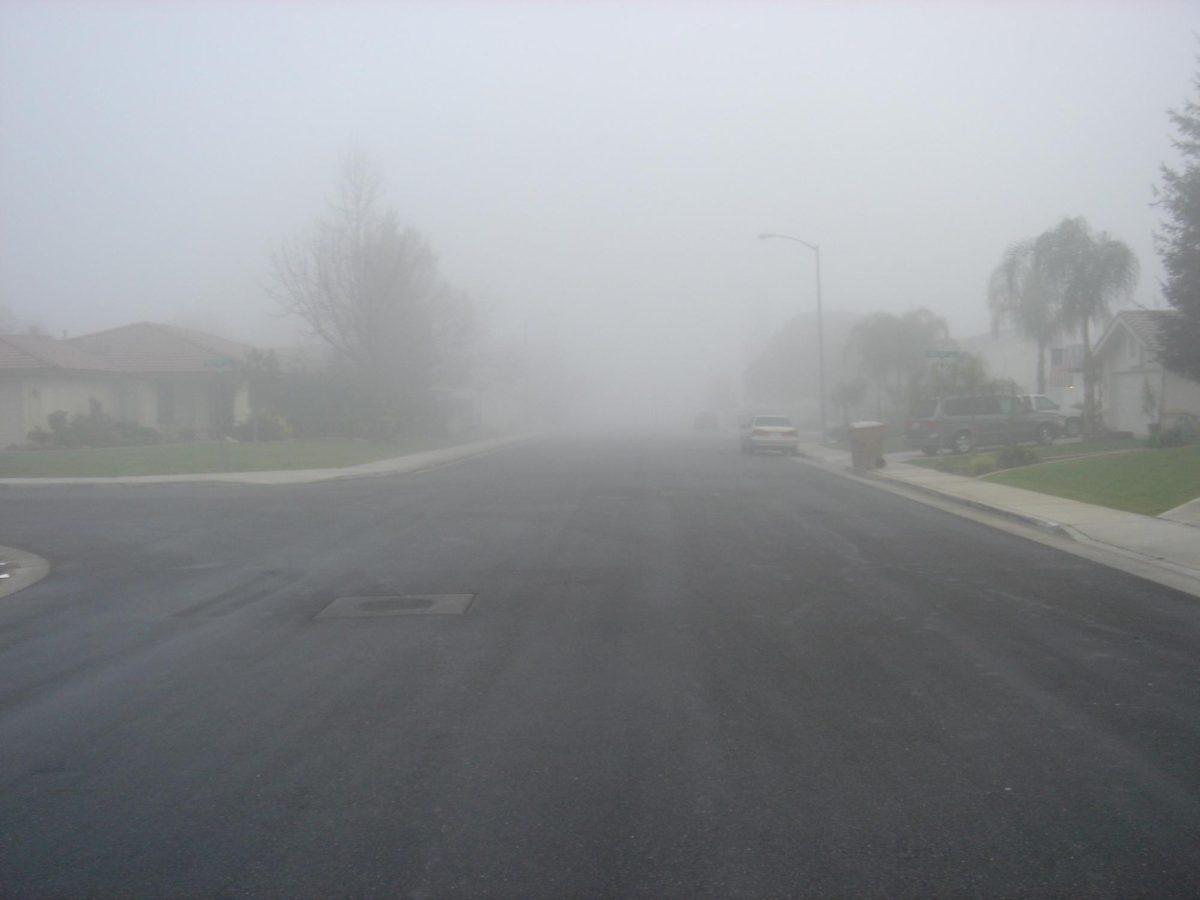
It’s fog season in California, bringing an increased risk of reduced visibility during morning commutes, particularly in the inland valleys.
Driving in fog can lead to serious traffic accidents, such as the 59-car pileup in Delano late January. Understanding how fog forms, and how to respond to it, can help drivers reduce risk on the road.
Understanding Fog
In the Bay Area, residents commonly experience advection fog, which forms when warm air moves over cold Bay Area currents. This type of fog typically dissipates by early afternoon. Visibility during advection fog events can drop below a quarter mile, especially in warmer months when temperature contrasts are stronger.
In the Central Valley, drivers encounter Tule fog, also known as radiation fog. Visibility in Tule fog can fall below 10 feet, creating extremely dangerous conditions.
Tule fog typically forms at night following periods of heavy rain. As the ground cools, the air above it cools as well, causing water vapor to condense. The Central Valley’s moist soil intensifies condensation, producing dense and persistent fog.
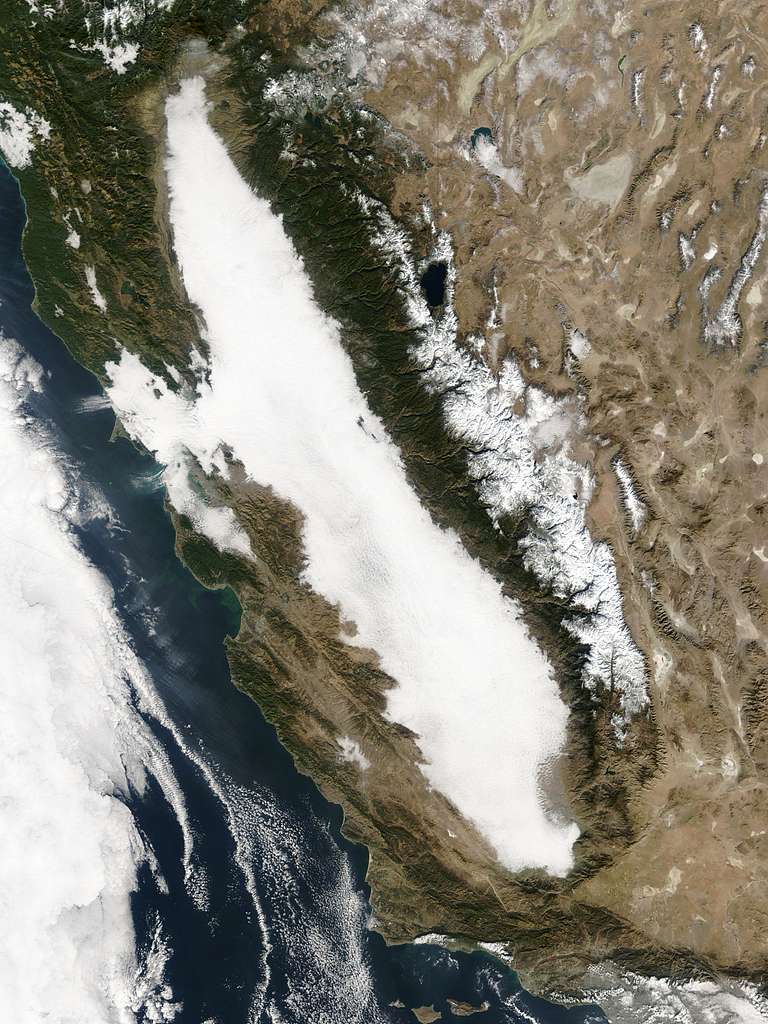
Because of the Central Valley’s geography, wind does not easily circulate through the region, allowing Tule fog to linger for days or even weeks. Tule fog can also occasionally drift into the Bay Area through the Carquinez Strait.
According to Elena Givental, adjunct professor of geography and environmental studies at California State University, East Bay, this year’s Tule fog season is especially intense due to the unusually wet conditions of this past autumn.
“After this heavy rain, the soils were still very wet… usually they are dry after the summer. But this unusual pattern resulted in much higher evaporation [and] unusually long and strong temperature inversion,” Prof. Givental said.
“Cold air is very dense. Because of this temperature inversion, it got stuck to the ground, and created this [thicker] Tule fog,” she added.
Fog Safety Tips
Reduced visibility significantly increases the risk of traffic collisions. The California Highway Patrol advises drivers to slow down and maintain a safe following distance to allow for adequate reaction time to sudden hazards. Drivers should stop only in emergencies.
It’s also recommended to drive with low-beam headlights. Navigating through fog with high beams on is considered highly dangerous, as the brighter light reflects off water droplets in the fog, creating a glare and further limiting visibility.
Maintaining a clear windshield is equally as important. Drivers should use windshield wipers and defrosters while also having the window slightly rolled down. It will help best with removing fog and condensation from the windshield.
Remaining alert is crucial. Drivers should avoid distractions such as texting, eating, or chatting. Watch for brake lights ahead and listen for approaching traffic that can’t be seen.
Drivers should also be vigilant of the “fog line,” which is the solid white line on the right edge of the roadway. The “fog line” serves as a visual guide to help drivers maintain their lane and avoid drifting into adjacent traffic.
Lastly, motorists should not drive in foggy weather unless absolutely necessary. Postponing a trip and waiting for visibility to improve is strongly recommended.
If the fog becomes too severe while driving, motorists should exit the roadway in a safe location and activate hazard lights. Stopping in the emergency shoulder of the freeway should be avoided.
Tule fog season typically ends after March, while Bay Area advection fog is more often seen in late spring and summer. Regardless of the type of fog, practicing safe driving habits can help reduce accidents and save lives.